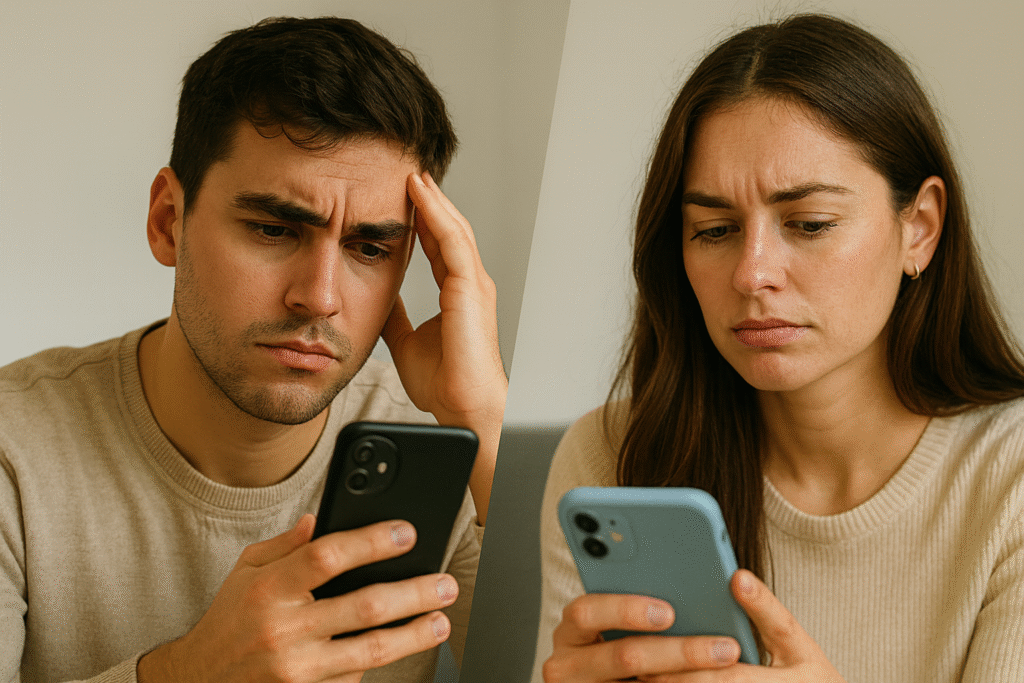
Dating apps have fundamentally changed how people meet, communicate and explore romantic connections. Profiles, photographs, swipes, matches and messages have introduced a digital layer to dating, creating new patterns around attraction, communication, expectations and relationship formation. Connections that once began through social circles, workplaces, introductions and chance encounters can now begin with a profile, a photograph and a few lines of text on a screen.
Online dating is shaped by much more than the act of matching with another person. Profiles create first impressions before a conversation begins, while photographs, prompts, interests and written descriptions can influence how someone is perceived. A dating profile represents only a limited view of a person, yet it can influence whether another user decides to engage, match or begin a conversation. Identity, presentation and attraction therefore intersect within a highly compressed digital environment.
Matching has introduced new dynamics into romantic interaction. The availability of large numbers of potential connections can influence expectations around attraction, compatibility and choice. A match may develop into an engaging conversation, remain a brief exchange, become inconsistent or never progress beyond the initial interaction. The distinction between finding a match and developing a meaningful connection has become an important part of modern dating culture.
Dating apps have also contributed to a growing vocabulary surrounding digital relationship behaviour. Ghosting, breadcrumbing, dry texting, slow fading, mixed signals and disappearing matches have become familiar terms in conversations about online dating. These behaviours can have different meanings depending on the circumstances, the individuals involved and the nature of the connection. Digital communication can also make interactions difficult to interpret because tone, timing and intention are often communicated through limited information.
Messaging creates another layer of complexity. Conversations can develop quickly, remain casual, become inconsistent or disappear without explanation. Delayed responses, short messages, changes in communication frequency and differences in conversational effort can influence how people interpret interest and compatibility. Unlike face-to-face communication, messaging often removes many of the visual and contextual cues through which people traditionally interpret another person’s reactions and intentions.
Technology continues to shape the experience of dating platforms. Algorithms, recommendation systems, subscription models, verification features, artificial intelligence and changing platform designs are increasingly significant elements of online dating. The structure of a platform can influence how potential partners are discovered, how profiles are presented, how choices are made and how conversations develop.
Online dating is also connected to broader changes in expectations around relationships. Attitudes toward commitment, exclusivity, communication, attraction and compatibility continue to evolve alongside technology. Dating platforms have expanded the geographical and social range of potential connections while introducing new questions around authenticity, attention, choice and the meaning of romantic interest in a digital environment.
Research, expert perspectives and contemporary observations provide different ways of understanding these changes. Looking beyond simple formulas reveals an environment shaped by technology, human behaviour, social expectations and changing definitions of romantic connection. The modern dating app is therefore more than a digital version of meeting someone. It represents a significant shift in how attraction begins, how people communicate, how potential relationships are discovered and how modern dating culture continues to evolve.